Student Voice

From early on in my teaching career two approaches were promoted by schools I worked in:   

1. Make a fuss of the small stuff – particularly with regard to pupil behaviour. 

2. You walk past the standards you accept. 

By constantly reminding students to tuck their shirts in, do their ties up, larger behavioural problems are far less likely to emerge. By constantly reinforcing standards, expectations are abundantly clear to all. 

Now that I am a Headmaster these tenets still hold true – we still remind each other to make a fuss of the small stuff and I have quoted the second recently in an INSET day to all staff. 

The same rigorous approach, however, has not consistently been applied to the use of language in schools – in any schools – and in Everyone’s Invited and in the countless testimonies of misogyny, coercion, abuse and assault, we see the consequences of this failure. Schools are desperately trying to understand their own cultures, desperately turning over stones to see what lies beneath. We have not always made a fuss of inappropriate language and we have on occasions walked past standards we should not have accepted. 

Schools now see that there is an unbroken line between relatively minor uses of poor language and more serious openly discriminatory language and through not challenging the former, the latter has been allowed  to thrive. The use of such language is often out of earshot, but it has become endemic in schools and has come to dominate and define school culture. 

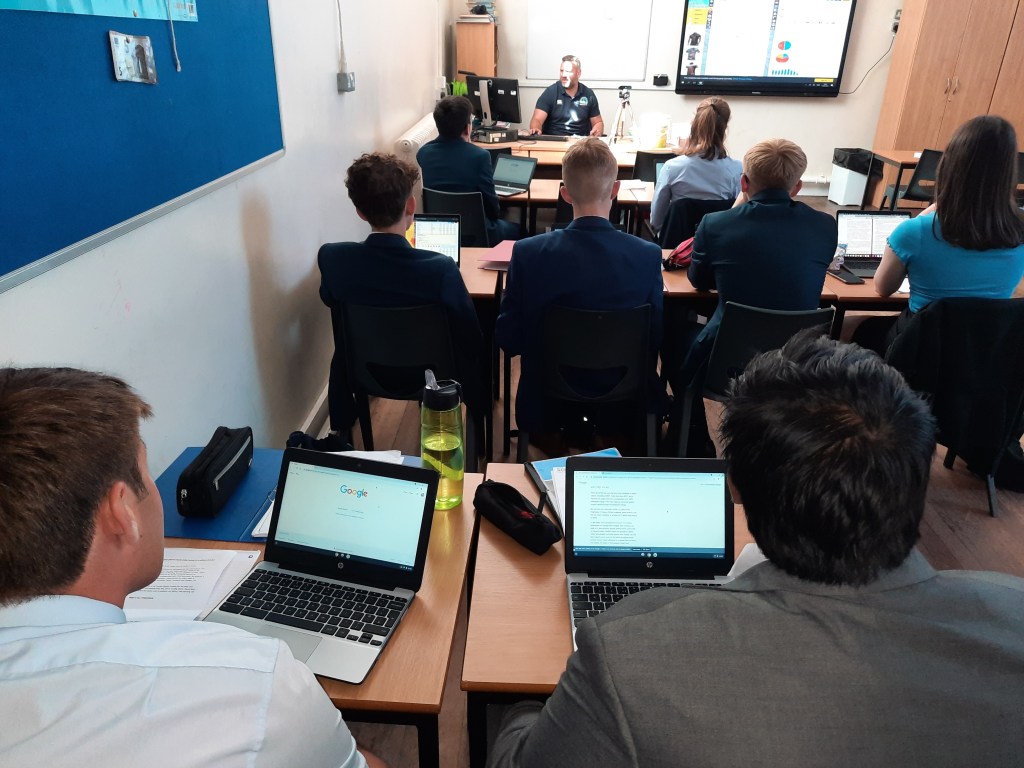
Student voice is central in helping us tackle this cultural decline, but as leaders of schools, there is a clear balance to be struck between use of pupil voice and delegation of responsibility. At the Dixie, we have actively used student voice to impact and change the school since 2015 – and not just through a vibrant Student Council. His Honour Judge William Ashworth was our guest of honour at our 2015 Prize Giving and he urged Dixie students to use the power of their voices to change their school for the better. The Ashworth Board is immediately outside the Headmaster’s Office – for students to post hand-written letters requesting change. Their requests receive a handwritten reply and have led to significant changes, including to uniform policy in which a removal of the distinction between ‘boys’ and ‘girls’ has been fully introduced and to catering, school trips, facilities and our approach to diversity.  

Conversations with alumni alerted us to the fact that historically, the culture in school might not have been what we thought it was in their day. Through extensive conversation and careful listening to the concerns of current and former students, we have adopted a more proactive approach than ever before and can see the more open and tolerant community we strive to be taking shape. We are hugely grateful to those who have contacted their old school to highlight the need for change, and delighted that our strides forwards and strength of student voice are recognised in our impressive inspection report, February 2022. 

Without students feeling they have a voice in school, how will they find their voice in their own community and in turn make positive changes in wider society and beyond?

Richard Lynn 22 March 2022
Transition – Dixie 6

I was delighted to read recently the Junior School Head Boy and Girl Blog in which Holly and Joel explain their thoughts about moving to the Senior School and share their enjoyment of the recent Transition Days.  Change is daunting for most of us and learning to negotiate successfully both the planned and unplanned changes that take place during our lives is a key skill for adulthood.  Of course we all need support to navigate change, after all few of us would consider buying a house without employing the services of a conveyancer!   At the Dixie the transition from Junior to Senior School is very carefully supported by close liaison between Junior and Senior School teachers, visits of key staff and current Year 6 students to the Junior School as well as carefully planned Science and Induction days at the Senior School.  I encourage you to read all about these experiences from Holly and Joel.

This year sees the launch of further support to all our Year 6 students making the transition to Senior School in September – the introduction of our Dixie 6 Curriculum.  At the Dixie, Year 6 are based in the Senior School, which gives us a unique opportunity to develop a fully transitional year.  The Dixie 6 curriculum is not a Junior School curriculum nor is it a Senior School experience. Dixie 6 is a carefully selected blend of the two that seeks to support students make the vital change from being Junior School pupils to becoming Senior School students with the increased independence that entails.  Year 6 students will be taught by teachers who teach their subject to A Level, they will engage in practical Design & Technology, Science and Home Economics Lessons in specialist laboratories and workshops whilst enjoying a base for many of their other subjects.  The Homework timetable has been carefully considered to ensure it builds on the demands of Year 5 whilst preparing students for the greater organisational requirements of Year 7.  Year 6 students will, this September,  learn to respond to more teachers than they have been used to thus far but all those teaching Year 6 have agreed the presentation standards they expect and marking principles they will employ, ensuring real continuity for the students. 

It is not just students who have traditionally found the move from Junior to Senior School a challenge – parents too can struggle with the increased independence expected of and demanded by their children.  The Dixie 6 curriculum will aid transition here too by providing parents with a weekly report on homework tasks to keep them in the picture whilst the students learn to record, manage and hand in the various tasks demanded of them.  Perhaps a feature for which parents will be most grateful is the very specific teaching of Google Classroom skills before any use of this tool is made within the curriculum. Both the Year 6 Form Teachers teach their charges ensuring an overview of each child academically and pastorally.

We are deservedly proud of our Sixth Formers who never fail to impress visitors with their confidence, compassion and resourcefulness.  They speak with enthusiasm of their school experiences including Gold Duke of Edinburgh, World Challenge, Dixie Leaders’ Awards and with excitement of their post A Level ambitions. This self-confidence and competence doesn’t happen by chance – students at the Dixie travel on a journey towards adulthood that is planned and designed. The skills they first employ in Forest School at the Junior School are those they later rely on during World Challenge; the organisational skills required to manage the demands of a diverse curriculum, a homework timetable and exam preparation are those they will employ at university and beyond.

Transition points are risky; it is natural for us to worry about our young people successfully making the various leaps between Infant & Junior, Junior & Secondary, GCSE & A Level etc. However,  with the Dixie 6 we are confident we have a support mechanism in place  to minimise that risk and to ensure that for Holly and Joel as well as their peers from our Junior School and our feeder schools the transition to secondary education is both smooth and successful.

Catrina Young, Deputy Head, Senior School

Consent Project Blog

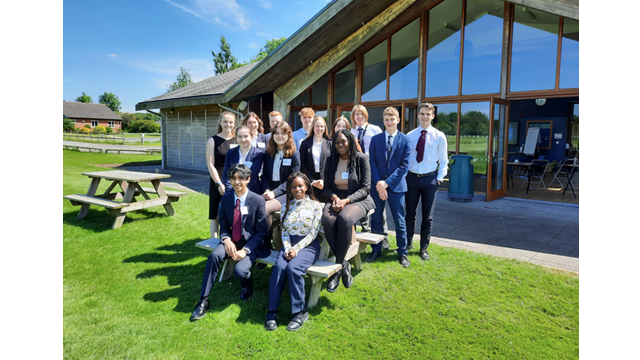
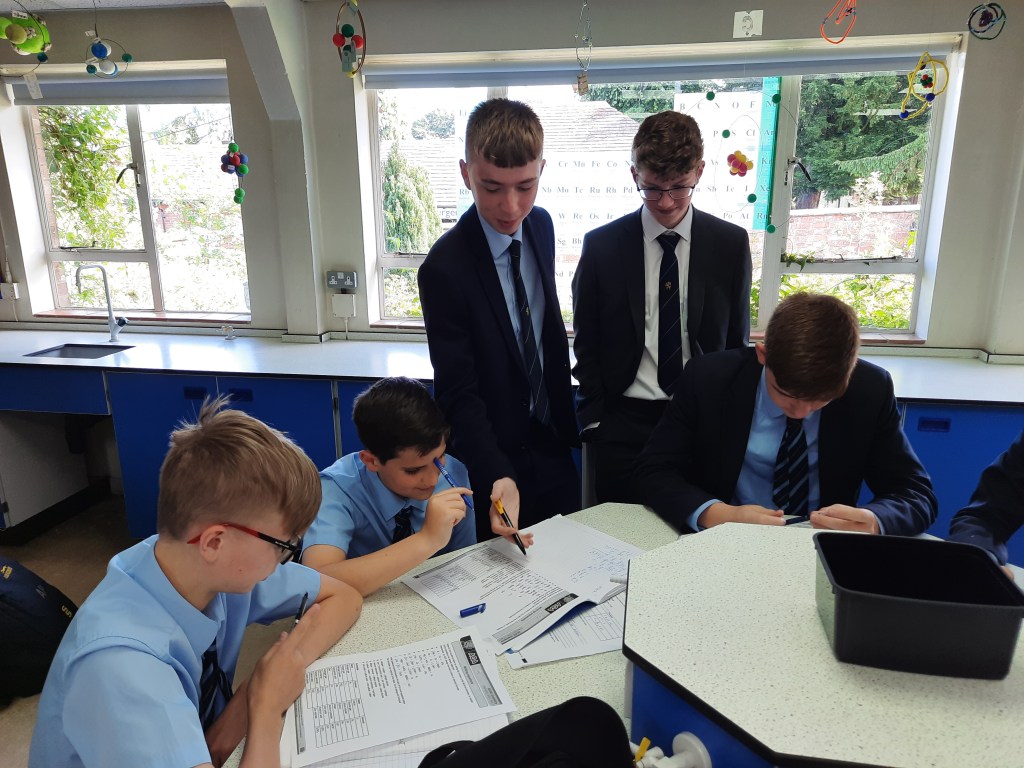
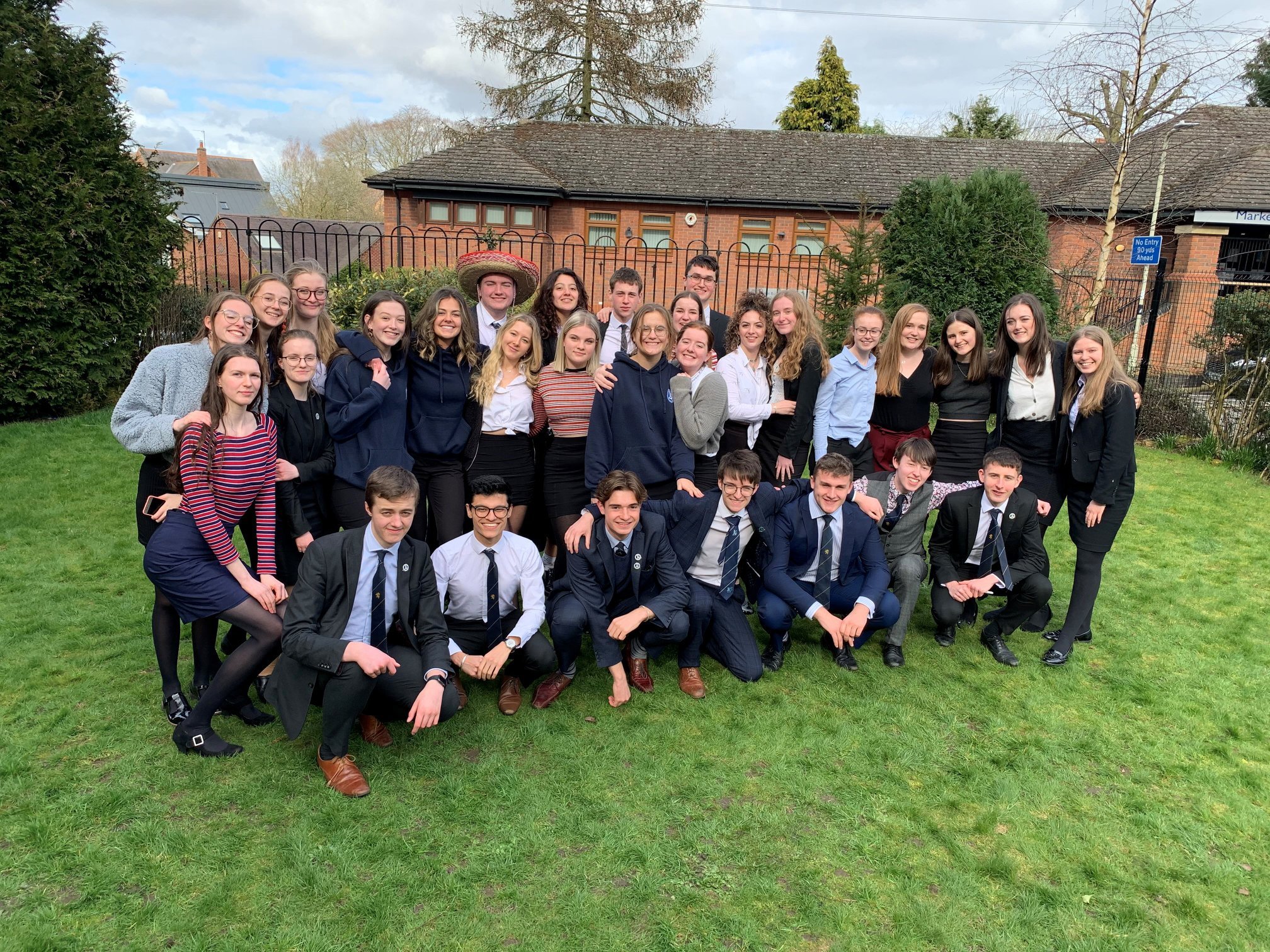
On the 6th June a collection of Lower Sixth Formers from Dixie Grammar School joined by Stafford Grammar met for the first time to discuss topics raised by the “Everyone’s Invited” campaign. Throughout the day the students respectfully discussed topics such as sexism, stereotyping and consent with the aim of helping to create a positive environment in both schools for all members of the community. They looked at the topics and how they are portrayed in the media including music and television and how certain concepts have been normalised when they should not be acceptable. The students took part in activities to better understand the concepts they were discussing and came up with ideas to explore in further sessions including applications in both schools. The day was a great start to what we hope will be a successful partnership between the two schools. 

Diversity Prefects and L6 cross-school project group

Academic Ambition

The year has been full of challenge for us all, and for schools, provision for Year 11 and Upper Sixth after their final exams has been an important additional consideration. The easiest option would have been to let these year groups leave school after half term, but this would have resulted in a 15-week holiday in the very year in which their social interaction has been severely curtailed and their academic courses contracted. At the Dixie, whilst perhaps the easiest option for all, we felt strongly that this would have been the wrong course of action.

Instead, Year 11 have returned to school this month as Sixth Formers, with all the additional freedoms and responsibilities this entails. They have risen to the challenge of the Sixth Form dress code and are embarked on bespoke introductory A Level courses.  They are making the academic leap between GCSE and A level courses now, in advance of September, but are also all engaged in the wider Dixie Sixth Form experience including the Dixie Leaders’ Award which involves working with the teachers in one of their A Level subjects to support younger students.  A key feature of life at the Dixie is the interaction between year groups and this has, like so many things, been difficult to maintain this year.  Requiring Sixth Form students to support lessons sets a fantastic example for younger students as well as developing critical skills in the Sixth Form students.  All the new Lower Sixth are also undertaking an introduction to the Extended Project Qualification where the academic skills of research, identifying sources, draft and completion is key to success. 

In recognition that A Levels are not right for all, those students who have secured appropriate work experience this half term have left to complete this with our blessing – we have enjoyed receiving reports of their achievements whilst working outside school.  The Upper Sixth having faced all the same losses of Year 11 and with the prospect of a similarly long ‘holiday’ have been offered bespoke one-to-one preparation for University courses. Some have returned to offer additional academic support to our younger students in lessons, and retaining responsibility for conducting tours for prospective parents and students. We couldn’t be prouder – of students and staff! 

Finally, we are delighted to offer the new option choice of A level Psychology. Miss Reason, the new Head of Psychology has met her new Lower Sixth A level class 2021/22 and is thoroughly enjoying this new and exciting dimension to her role.

Silent Corridors?

The Secretary of State for Education has suggested that silence in school corridors should become the norm, and that a ban on mobile phones is essential for avoiding poor behaviour. The Dixie corridors are not silent, and whilst we have a zero tolerance policy on the recreational use of phones, ultimately we want students at the Dixie to be able to self-regulate their screen time – not possible if all access is banned. Behaviour at the Dixie is exceptional and the quality of relationships is one of the most important facets of the Dixie Difference. Here is an earlier post on Freedom – an important underlying principle of education at the Dixie.

This academic year is the first in which I have delegated the responsibility for conducting prospective parental tours in the Senior School to our upper Sixth. Invariably our guests comment on their maturity, articulacy, independence of mind and the extent to which they are proud of their school. Visitors always comment how struck they are by the maturity of those in our Sixth Form; I must admit, they are hugely impressive.

The youngest in our community – our Pippins – just starting on their 3-18 journey will become the 2034 Upper Sixth and will be just as impressive as our 2020 cohort, I have no doubt. Our Upper Sixth did not develop these qualities all at once in their final year, nor were they developed by chance. Students at the Dixie are drip-fed independence and responsibility from 3 to 18 to ensure they leave fully equipped with the discipline and resilience they need to successfully tackle the challenges ahead.

Education at the Dixie has been carefully designed – we have thought long and hard about our programme and we continue to challenge ourselves to ensure it matches the needs of students. In particular, we believe that allowing young people the space to make mistakes is a crucial ingredient in ensuring they develop these qualities. Consequently we:

  1. Do not have CCTV cameras around school – Senior School students are not watched constantly, but we do expect them to act responsibly whether or not a teacher is present. As they progress through the years from Year 1 to the Upper Sixth, we increasingly expect students to look out for and take responsibility for those younger than them.
  2. Advise and support parents to not ban children’s use of social media, but rather to control its use. We want students at the Dixie to be able to self-regulate their screen time. We have a zero tolerance policy on the recreational use of mobile phones in school, except in the Sixth Form house, by which time we expect students to have mastered the management of their own screen time and their own decisions online.
  3. Advertise the many weekly academic revision sessions but they are not compulsory. We expect Year 10 and 11 students to be able to manage their own learning outside the classroom and to seek help when it is needed.
  4. Encourage healthy eating, but we would not manage this effectively through the removal of all less nutritious options.
  5. Do not supervise study time in our Sixth Form. We would not equip our students for the academic rigours and freedoms of university by removing all freedom in the Sixth Form; the development of self-regulation during free time is vital in the Sixth Form. That said, our Sixth Form are very closely monitored as the final freedoms associated with the last two years in school are introduced to them.

Our Forest School, DOSE, Duke of Edinburgh Award Scheme, co-curricular programme and World Challenge expeditions are central pillars in the development of these so called ‘soft skills’ of discipline, self-control and resilience and many more. At whatever age, the freedoms Dixie students enjoy come with responsibility, which in turn ensures they develop the skills necessary for the next stage in their education.

Silent corridors? They have been largely silent for the last year and as we approach the Summer Term, with a return of our co-curricular programme, I very much look forward to Dixie corridors returning to life!

Image

Richard Lynn 12/4/2021

Early Years at the Dixie

As a first time parent, one of the most important decisions you make is deciding where your children will start their school career.  We all have our own experience of education and school that undoubtedly influences our decisions but deciding for your 3 year old can be both exciting and daunting. I have worked in 4 primary settings during  my career and each one has had a pre-school or nursery attached and each one has been very, very different. Despite my experiences in my career, when I became a Mum, I experienced all the same worries, anxieties and confusion as any other first time parent.

There are hundreds of theories and approaches in Early Years Education.  Play; let them explore; observe; make notes; observe more and make more notes versus teach them to sit at a table, learn from the board, be guided at every step by a teacher. The first is the most dominant approach and is all about practitioners facilitating children’s learning and allowing them to develop themselves through structured play opportunities.  There is definitely a place for this – for observations and for facilitating and providing learning opportunities.  My own children love nothing more than a box of dressing up clothes, or a box filled with lego bricks but that isn’t how they learn number recognition, letter recognition or how to write their names – they need guidance, demonstration and support in their play but also at their individual pace.  They need a very careful blend of the two. 

In the Early Years, practitioners assess the children against ‘Early Learning Goals’.  But they don’t meet one and then move on to the next.  Learning isn’t like that at any stage and certainly not in the Early years.  It isn’t linear or a perfect diagonal development line: it’s more like a scatter plot! Children learn and develop at different rates and the key to the best Nursery is practitioners knowing each child individually and personally and being able to structure each child’s day, play, activities and learning to help them develop individually. 

When my own son, Max was 12 months he started preschool and stayed there until he was 3 and a half.  He loved it – he loved ‘Sophie’.  He was happy to go and happy when he was there and as a parent that was my priority. He learned about playing alongside and with others but as he turned 3 he needed more.  He needed to be more stimulated in his play but also needed to learn to sit with an adult and be guided more.  He learnt mark-making through painting and drawing, but couldn’t automatically sit, hold a pencil, recognise letters – he needed more guidance. 

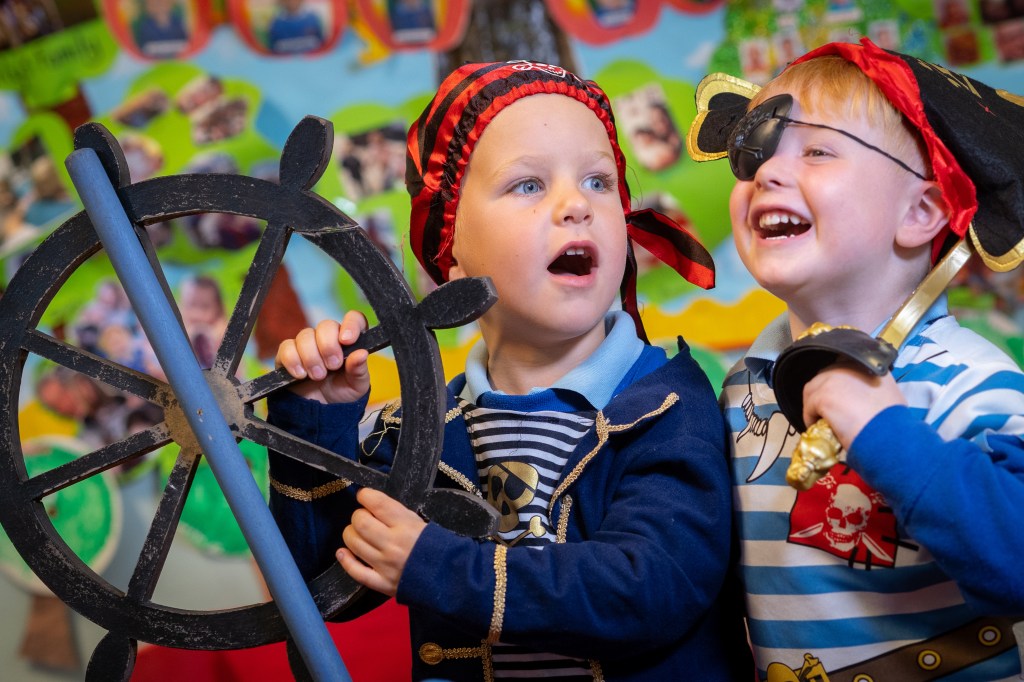
In Pippins I am confident that we get it right.  As a small setting we know the children so well and we focus on them and what they need.  We are informal in our play approach but formal in our development of their key learning – when they are ready.  Weekly Maths, Phonics, French, Music and PE enable our youngest pupils to begin to understand the academic disciplines as well as develop enjoyment, skills and knowledge. As classes, groups and individuals they are carefully guided at a pace personal to them.  They have time to consolidate, practise and grow skills through play in a range of contexts, but I believe it is the guidance which is crucial and fundamental.

I know too that we are lucky to be in a school surrounded by fields and beauty, and Pippins makes the most of all of this:   rambles to the woods, chats with the farmer when he is on his combine harvester working the corn, or perhaps a real-life bare-footed bear hunt through the woods!  What better real experience to then draw, paint and write about?  Their interests are already ignited and they can then be guided to learn through them. 

Now my second son has started in Pippins, earlier than Max, I can already see his advances, understanding and enjoyment accelerating.  He loves Pippins, loves his friends, his teachers and his play. After 2 months he is already now speaking in French to me at home and recalling his phonic sounds.  I am clear about what he is doing well, in his social and emotional skills, his organisation, his friendships, as well as his counting and understanding of letters and sounds.  I even know the little bit of French he has learned, albeit that his favourite phrase is ‘Je m’appelle Hulk’. Having these links with the practitioners to the school is so important but it isn’t just the staff in Pippins.  Pippins children get to know other staff and children in the school.  The specialist lessons are with specialist teachers that know how to teach their subject to the youngest children in the very best way.

Pippins at Dixie are not just a pre-school, a nursery tagged on to a school, they are part of The Dixie.  They use all the facilities, get to know all of the staff and get to know all of the children-the transition to Reception Class is seamless as a result.  The rich experiences, guidance, fun and relationships formed make Pippins the perfect start to any child’s educational journey.  I for one have never worked with such a strong Nursery where we get it so right and in which our children thrive and love school.

Emma Billington

Headteacher, Dixie Grammar Junior and Nursery

Diversity

Working at Dixie for the last sixteen years, I have always hoped and believed that we offer an environment that is tolerant, inclusive and welcoming to all. Certainly, the ‘Dixie family atmosphere’ was one of the things that first attracted me to the school back in 2004, an important factor in my decision to leave a large urban Secondary. But we should never confuse being a small school with being a homogenous one – like the wider society of which we are part, we are a diverse community of people of different faiths, ethnicities, genders, sexualities and abilities.

The world moves on. It is clearly not sufficient, for example, for me as a white male to simply ‘hope’ or ‘believe’ that we are inclusive and welcoming to students (or staff) of a different ethnicity or gender. If we are to be a school where everyone feels that their identity is valued, then it is vital that we actively challenge ourselves to ensure that this is the case.

Following conversations with students both past and present, Dixie is therefore seeking to reaffirm its commitment to diversity. 2021 sees the launch of our ‘Diversity Calendar’ – which can be found on our website and a link to which is provided at the end of this blog. This is a public statement of our commitment to diversity and to ensuring that Dixie is a supportive environment for all. In practical terms, it is a commitment to marking important dates in the calendars of world religions, alongside events associated with race, gender, sexuality and disability. We will seek to mark these key dates in a variety of ways – through assemblies, form time activities and curriculum provision – with the stated aim that all students have the opportunity to see the inherent value in our diversity and that all students, whatever their background or identity, see Dixie as a place where they are safe, respected and valued.

A few weeks ago, my assembly focused on Holocaust Memorial Day – the first date in our 2021 Diversity Calendar. It was a highly appropriate occasion upon which to launch our diversity pledge – a sobering reminder of the consequences that can occur when diversity is not celebrated, but rather feared; of how fear and hatred can drive persecution on an almost unimaginable scale. The Diversity Calendar is Dixie’s visible commitment to a welcoming and inclusive environment that celebrates diversity as strength.

Back in 2004, I believed that Dixie was an inclusive school with a family atmosphere and I am proud that in 2021 we will be demonstrating the richness and diversity of that family.

Jon Dixon

Dixie Diversity Calendar 2021

  1. Holocaust Memorial Day 27 Jan
  2. Chinese New Year 12 Feb
  3. International Women’s Day 8 March
  4. Easter 22 March
  5. Eid al-Fitr (Islam) 13 May
  6. Mental Health Awareness Week 17 May
  7. Pride Month 1 June
  8. Autistic Pride Day 18 June
  9. Disability Awareness Day (will need to be marked before end of term) 12 July
  10. Black History Month 1 October
  11. Diwali (Hindu) 4 November
  12. Guru Nanak birthday (Sikh) 19 November
  13. Hanukkah (Jewish) 6 December
  14. Advent and Christmas December

GCSE and A Level Exams – DfE consultation

The Government and DfE will be receiving many responses to their consultation – if you haven’t done so, do consider giving your own personal feedback. The survey takes about half an hour to complete; the essence of my responses is outlined below.

It should be said at the outset that there is no neat solution to the problem of GCSE and A level grades this year. Every solution will have a problem and so we are forced to consider what might be the least worst of the bad options. I have read the DfE proposals thoroughly and considered with interest the views of many educational commentators.

In seeking to navigate this challenge I am most concerned that the proposals lose sight of those most affected: the pupils.

In suggesting that teachers must not ‘decide the grade a student might have obtained had the pandemic not occurred’, there are only two alternatives – a final assessment, or assess what they know now.

Any final assessment will present as many problems as it solves (and create a huge layer of administration). The suggestion that teachers might be trained to mark these and then their marking marked, doesn’t make the system any fairer. It is of course in the main part teachers who mark GCSE and A level exams in a normal year. This proposed final assessment – maybe compulsory, maybe not, possibly released in advance, possibly not, is an exam by another name. That these grades might be presented early to allow for a wave of appeals in school will not calm the inevitable outrage.

Assessing what students know now would unduly penalise them (we know they make huge progress between January mocks and the real exams) and assessing them through GCSEs in the summer has already been ruled out….but iGCSEs are going ahead, resulting in further inequality between those who have prepared for GCSE & iGCSE. 

The layer of administration these proposals create aside, it does seem that the individuals forgotten in all this are the pupils themselves. We are seeking to assess this A level and GCSE cohort at the end of two-year courses, with more time having been spent out of school than in school. At the Dixie, we have continued with a full, live day of teaching, from Reception Class to Upper Sixth and our students are as well prepared as ever. The inequalities in provision and gulf in opportunities for access to remote learning for pupils in different schools is well documented. Very few students at the Dixie needed to self-isolate last term – and when they did, they simply rejoined lessons online. We were fortunate in comparison to many schools locally. 

There are only two fairest ways to proceed – hold all exams as normal or stop all formal assessment and use centre assessed grades as last year. Given that pupils have been told all exams are cancelled (this decision was taken far too early again this year, but let’s look forward, not back) – for once, we should put them first and let them progress to the next stage in their careers with centre assessed grades. There is time to scrutinise these grades, to visit schools and sample work where it is felt necessary. As last year, these grades will be higher than in a normal year (grades won’t take into account exam hall wobbles etc.), but the early processing and removal of all exams will allow us to run our innovative pre A-level and pre-University courses, which did so much to prepare students for their next stage (as well as help them realise the benefit of learning for learning’s sake).

This cohort of GCSE and A level students, more than any before them in my 30 years in teaching, deserve all the consideration we can muster.

Richard Lynn 18 January 2021

Remote Teaching and Learning Jan 2021

Live teaching is an increasingly prominent feature of remote education for both Junior and Senior School pupils and whilst an incredible opportunity, it brings its own challenges. We are immensely proud of the adaptability and enthusiasm of teachers in learning new skills, and incorporating this learning into their remote lessons to the benefit of students at the Dixie. There is no harm in teachers being reminded what it is like to be a learner – in preparing for the challenges of multi-screen presentations and live demonstrations, if we are honest, at times we have all felt the real challenge in learning new skills.  We have all needed to adopt a growth mindset – the same mindset we regularly ask students to embrace.

In the first period of lockdown, our emphasis at the Dixie was on achieving balance for students – we were steadfast in our belief that a day in front of screens should be avoided – that it would be counterproductive for learning and well-being – for both students and staff. Lockdown this term features a greater element of live teaching, but again, whether it is Reception Class learning the ‘igh’ sound for the first time or Sixth Form mathematicians tackling binomial probability, we will be careful to provide a balance in our offering. Live teaching is a fantastically rich opportunity for staff and students, but without the rich non-verbal communication of a classroom, the experience can be all the more intense and without thought even be oppressive. Our aim is to ensure that our live lessons are carefully balanced with screen time and individual working time, with a mix of tasks on screen, tasks at a desk as well as outdoors. 

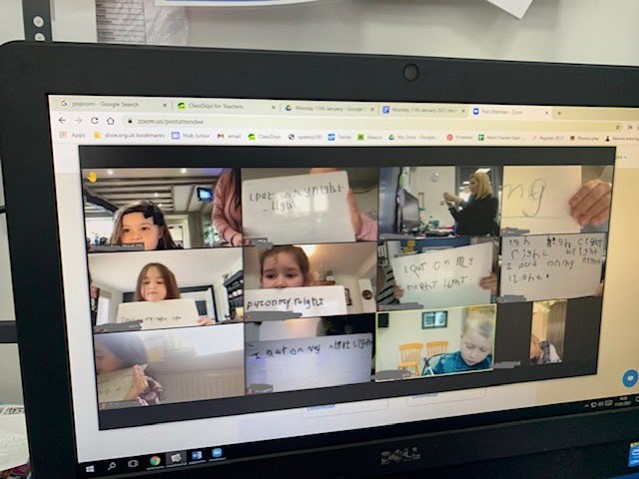
Reception Class at home with mini-whiteboards learning the sound ‘igh’ for the first time

Unlike the last lockdown, in the Senior section, Design and Technology, Art, Music, Home Economics and PE lessons are taking place – these practical and creative subjects also help ensure a balance to the working day for students. Offering ‘live’ practical subjects has been made possible by increased investment in technology within school.

In my own teaching in the Sixth Form, the sensory deprivation of the online classroom (visual and verbal interaction is so much more of a struggle) makes me try all the harder to ensure everyone understands what is being said – and as a result the learning is far less independent than it would otherwise be. For this reason, my teaching will be a mix of live and pre-recorded lessons – the latter giving even greater opportunity for independent learning. Whilst this is more appropriate to some subjects rather than others, the principle of a balanced diet of online provision is important, and backed up by research recently published. 

In their new review of the evidence on remote learning published by the Education Endowment Foundation (EEF), they report that the quality of remote teaching is more important than how lessons are delivered. They reported no clear difference between teaching in real time (“synchronous teaching”) and alternatives (“asynchronous teaching”). Approaches to remote learning vary widely and have different strengths and weaknesses – it is this varied approach which is important for pupils as they learn. Teachers at the Dixie are supported to consider which approaches are best suited to the content they are teaching and the age of their pupils – with the approach of a balanced diet of learning an underlying principle in all we do.

“I am hugely impressed by the ability of Dixie pupils to rise to the many challenges put before them.”

Just as the success of online learning has required the professionalism and enthusiasm of teaching staff it has also relied upon the commitment and enthusiasm of pupils and cooperation of parents.  I am hugely impressed by the ability of Dixie pupils to rise to the many challenges put before them, including our latest call for uniform to be worn whilst attending school remotely.  Whilst none of us would have chosen this situation, this generation of Dixie pupils are developing a whole new set of skills, both technical and personal, that will serve them well in their futures.

Value Added

Value added is not a measure of pupil achievement, but of progress – it measures the journey taken by the student and the difference made by a school, rather than the destination. That is why very selective schools are silent when it comes to measures of value added – some are so academically selective that it becomes impossible for them to add value.

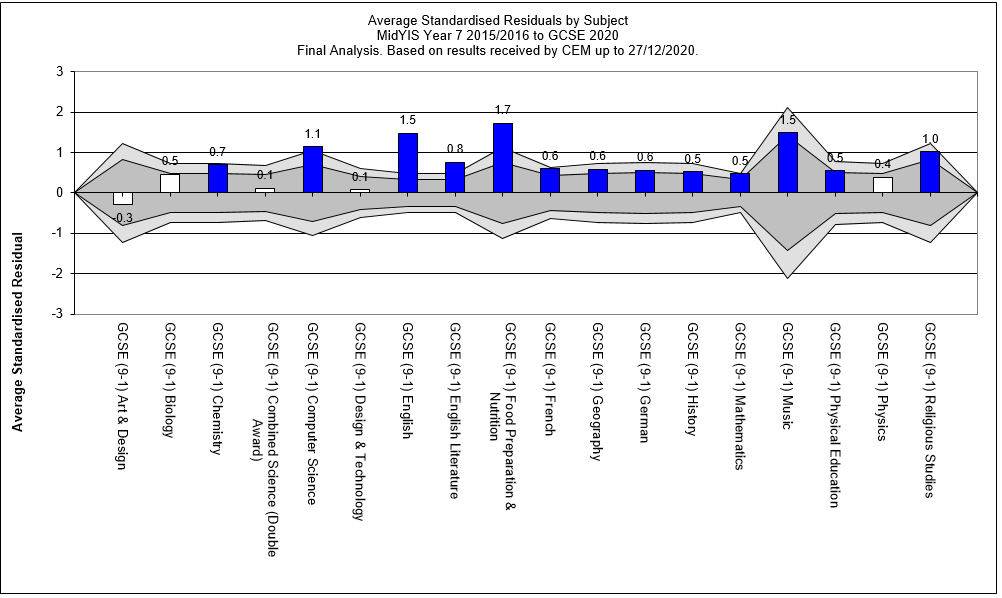
The Dixie takes part in a statistical project operated by the University of Durham. Students new to the Dixie in Years 7 and 9 are given an adaptive computer test (the questions adapt to the ability of respondent) and from this, predictions regarding GCSE outcomes are made. ‘Residuals’ measure the difference between this prediction and the actual GCSE grade achieved.

It is gratifying that the value added by the Dixie is on average more than one grade for every GCSE taken compared to all schools nationally. Taking individual students’ ability alone, their success at GCSE, regardless of gender or need, is more than one grade higher than predicted.  Compared to just independent schools, the value added to every GCSE taken is on average one third of a grade.

Coloured bars show statistically significant value added

Academic value added is just one part of the Dixie Difference – just one part of the value we add. Responsibility, integrity, self-discipline, honesty and good manners, respect for others and commitment to the community are central to the Dixie’s Aims and Values – qualities we see emerging in our students and in the impressive young men and women in our Sixth Form.

Richard Lynn 3 Jan 2021

Design a site like this with WordPress.com
Get started